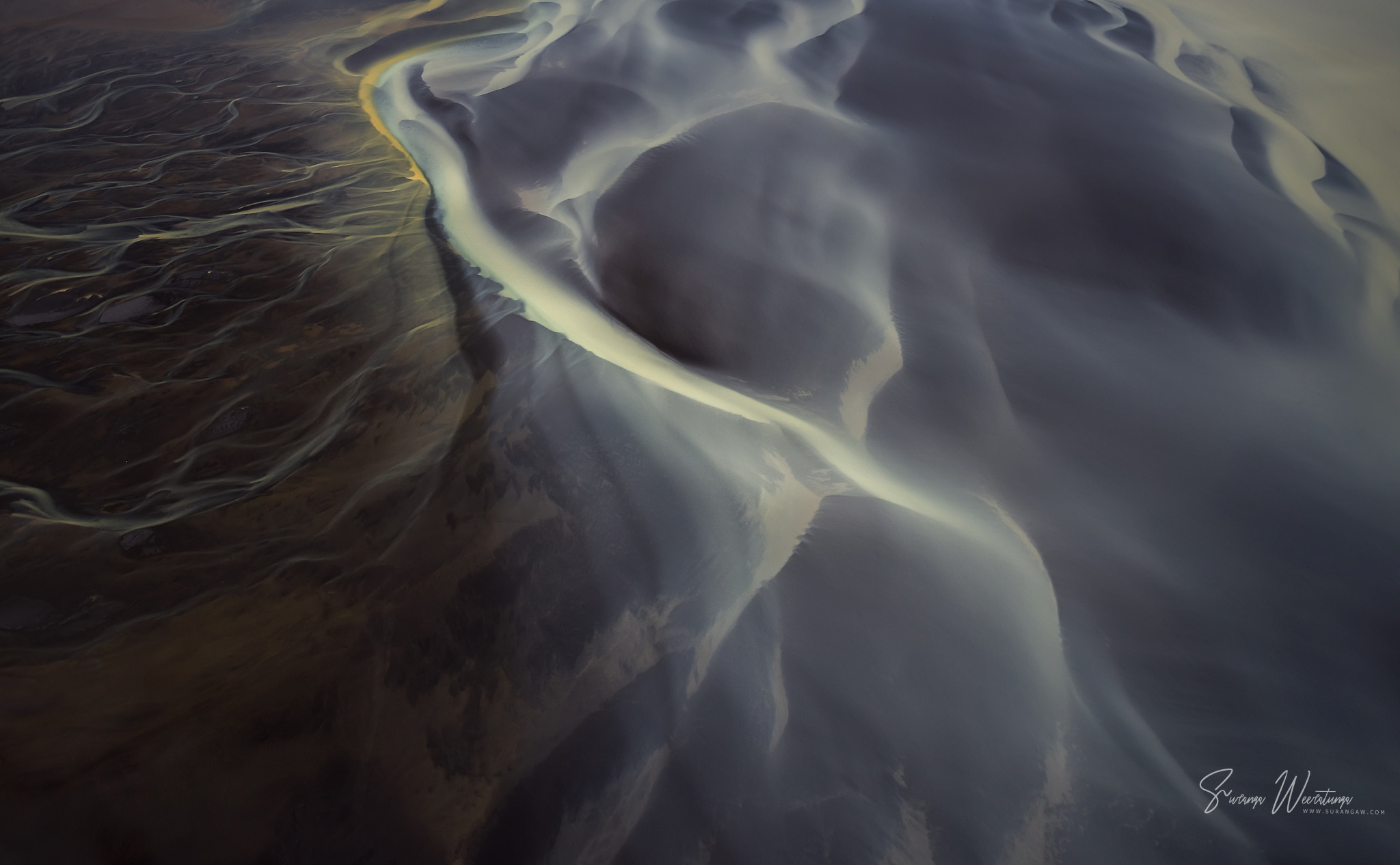
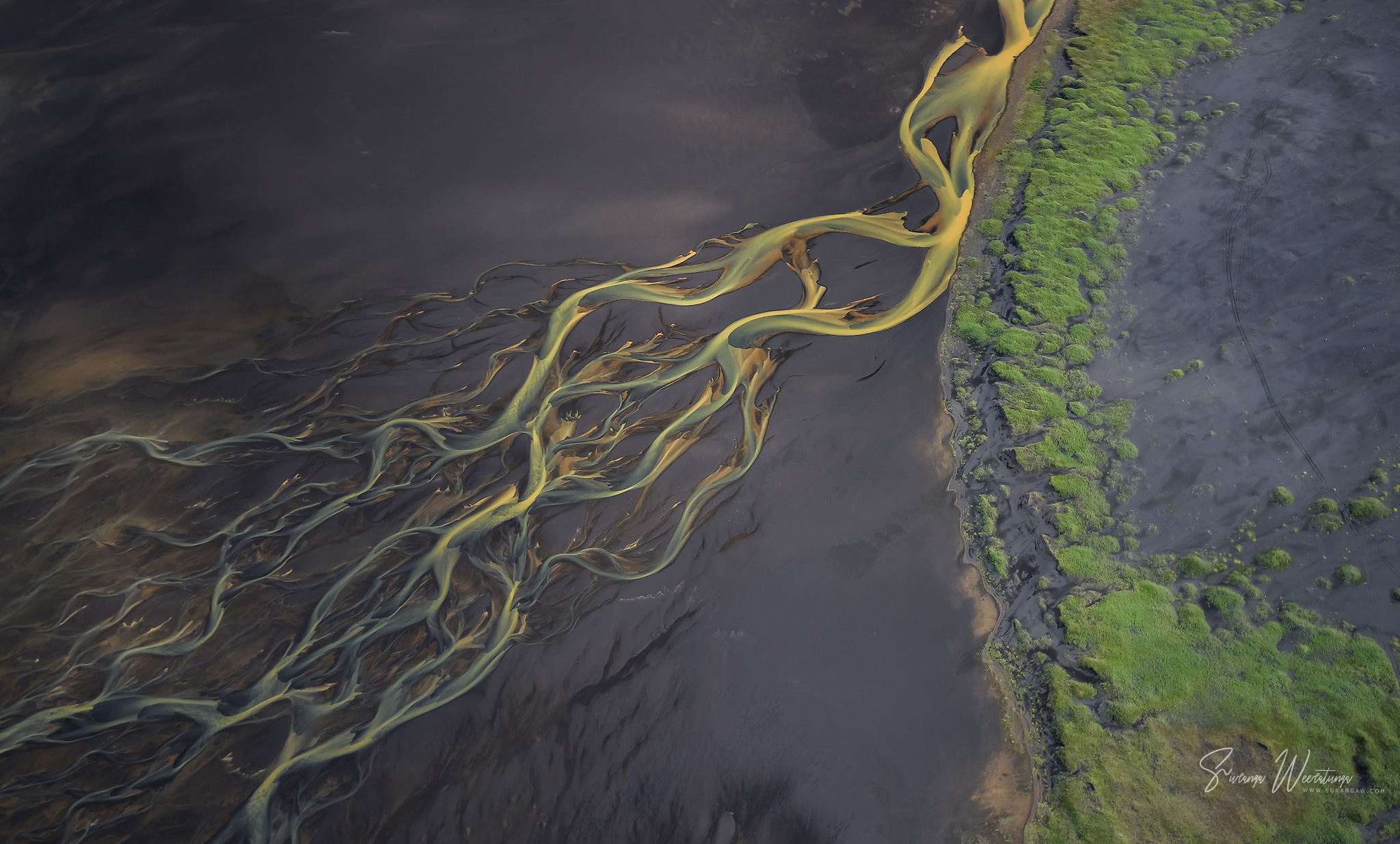
From the ground, an Icelandic glacier river is a wide, cold, grey stream you drive across on a long bridge. From the air it turns into something else: hundreds of channels splitting and joining across black sand, in shades of blue, gold, green and silver that change with every minute of light.
Why the water has these colours
The rivers start under Iceland’s ice caps, like Vatnajökull, Langjökull and Mýrdalsjökull. As the glaciers move, they grind the rock beneath them into a fine powder called glacial flour. The meltwater carries it out, and it gives the rivers their milky blue, turquoise and grey tones.
Where the water slows down and gets shallow, iron-rich sediment and algae add yellow, orange and green. Against the black volcanic sand, every colour stands out.

Braided rivers that never stay still
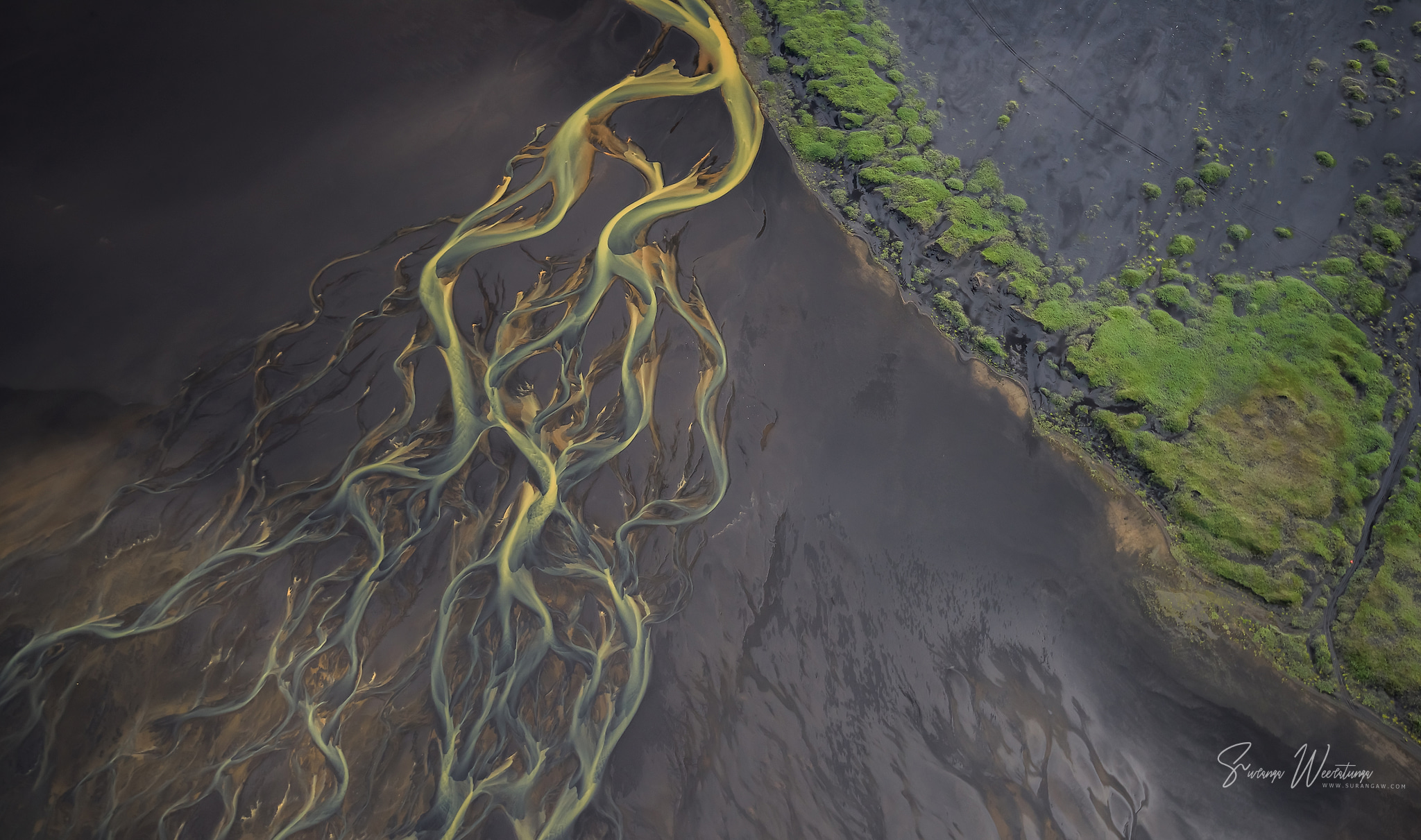
Glacier rivers carry so much sand and gravel that they keep blocking their own path. The water splits into many small channels, joins up again and splits once more. These are called braided rivers, and Iceland’s south coast and highlands have some of the best examples in the world.
The channels move with every flood and every season, so the same river looks different each year. No two photos of these patterns are ever the same.

Photographing them from the air
The patterns only make sense from above, so you need height. I shoot straight down or at a slight angle, which turns the rivers into abstract shapes with no horizon.
Use a fast shutter speed, at least 1/1000 s, to cancel out the movement and vibration of the aircraft. A 24–70mm lens covers most scenes, and a longer lens picks out details like a single bend or a splash of orange silt. Overcast days are good too: soft light shows the colours of the water without hard reflections.
Where the rivers meet the sea
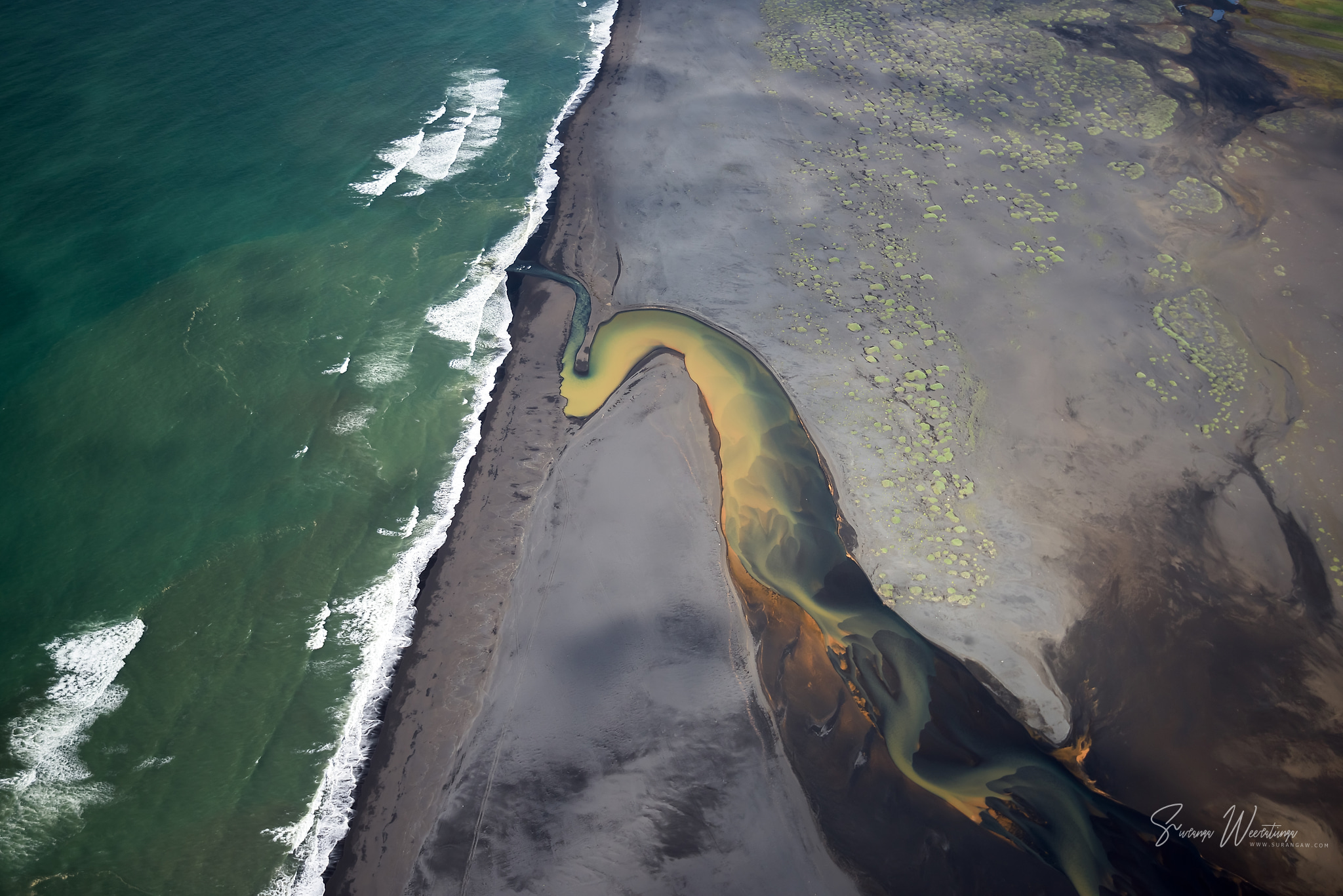
Many of these rivers flow south across the sandur, the wide outwash plains between the glaciers and the Atlantic. Where a river reaches the coast, its colours run into the green surf, and the black beach draws a sharp line between the two.
Planning your flight
Scenic flights by small plane and helicopter leave from Reykjavík and from towns along the south coast. Ask for a flight over the highlands or the south coast rivers, and book a day or two of flexibility, because flights are often moved for wind and low cloud.
If you want to fly a drone, check the rules from the Icelandic Transport Authority first. Many protected areas and national parks need a permit, and drones must stay well away from aircraft and airports.