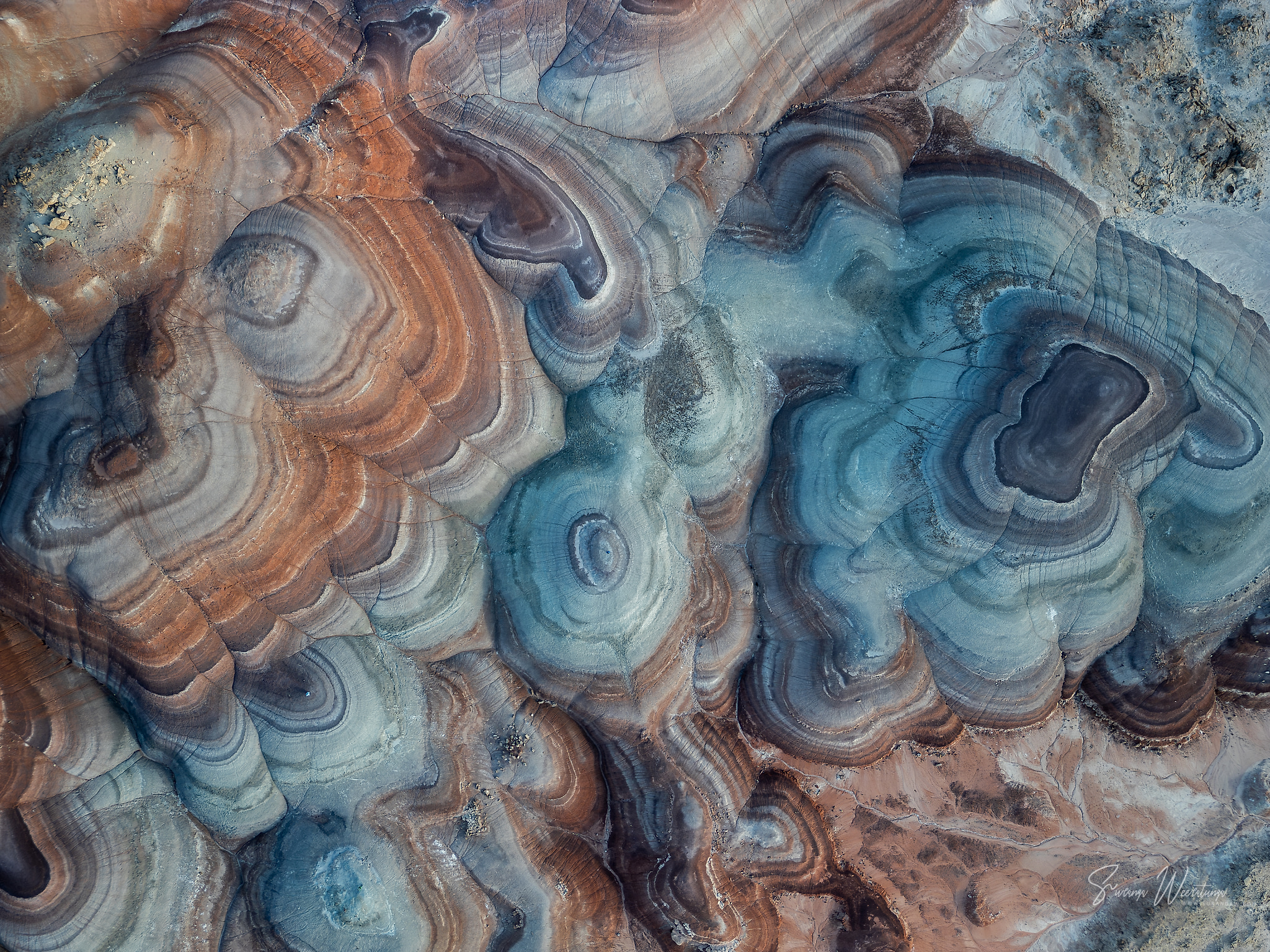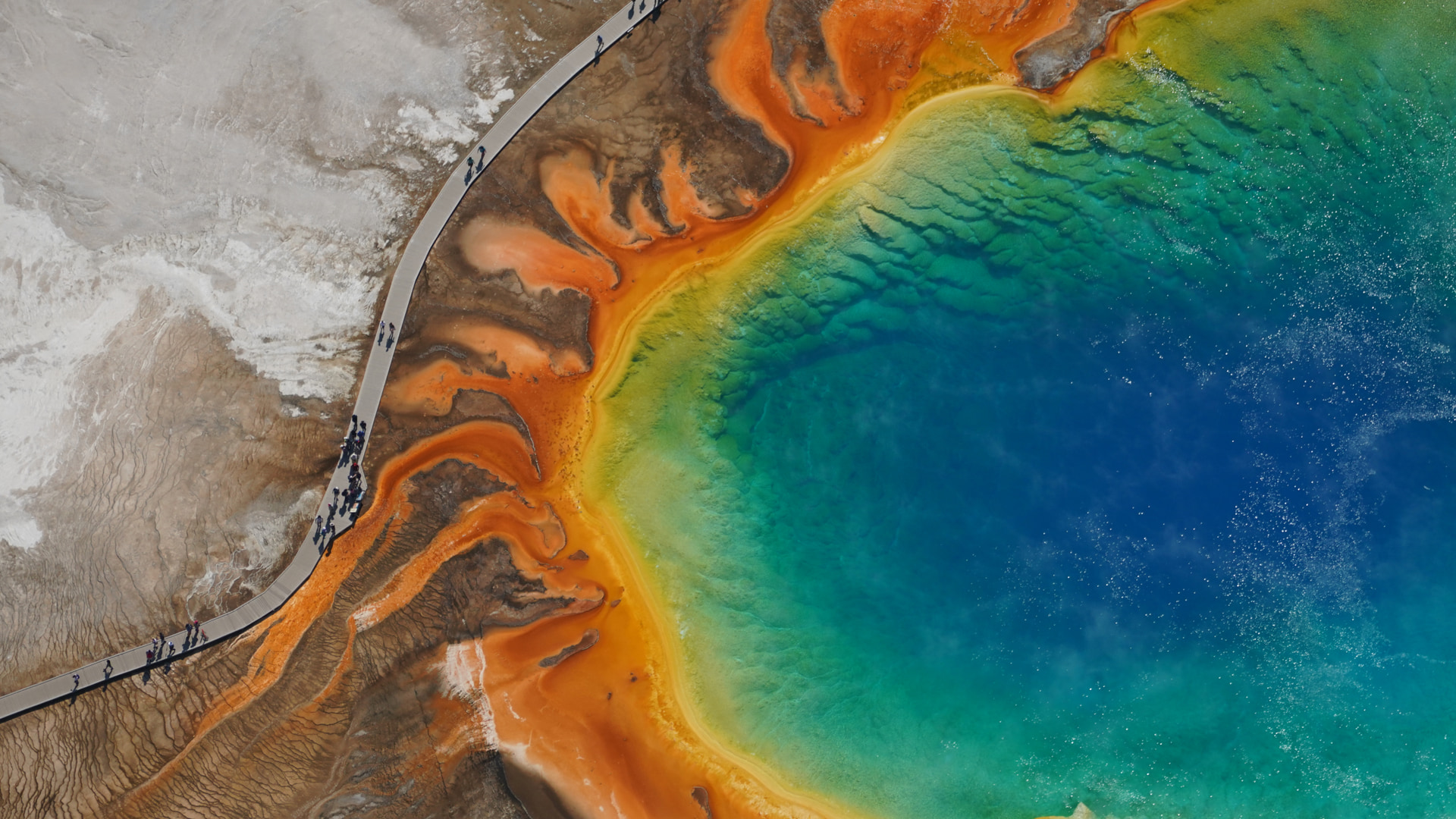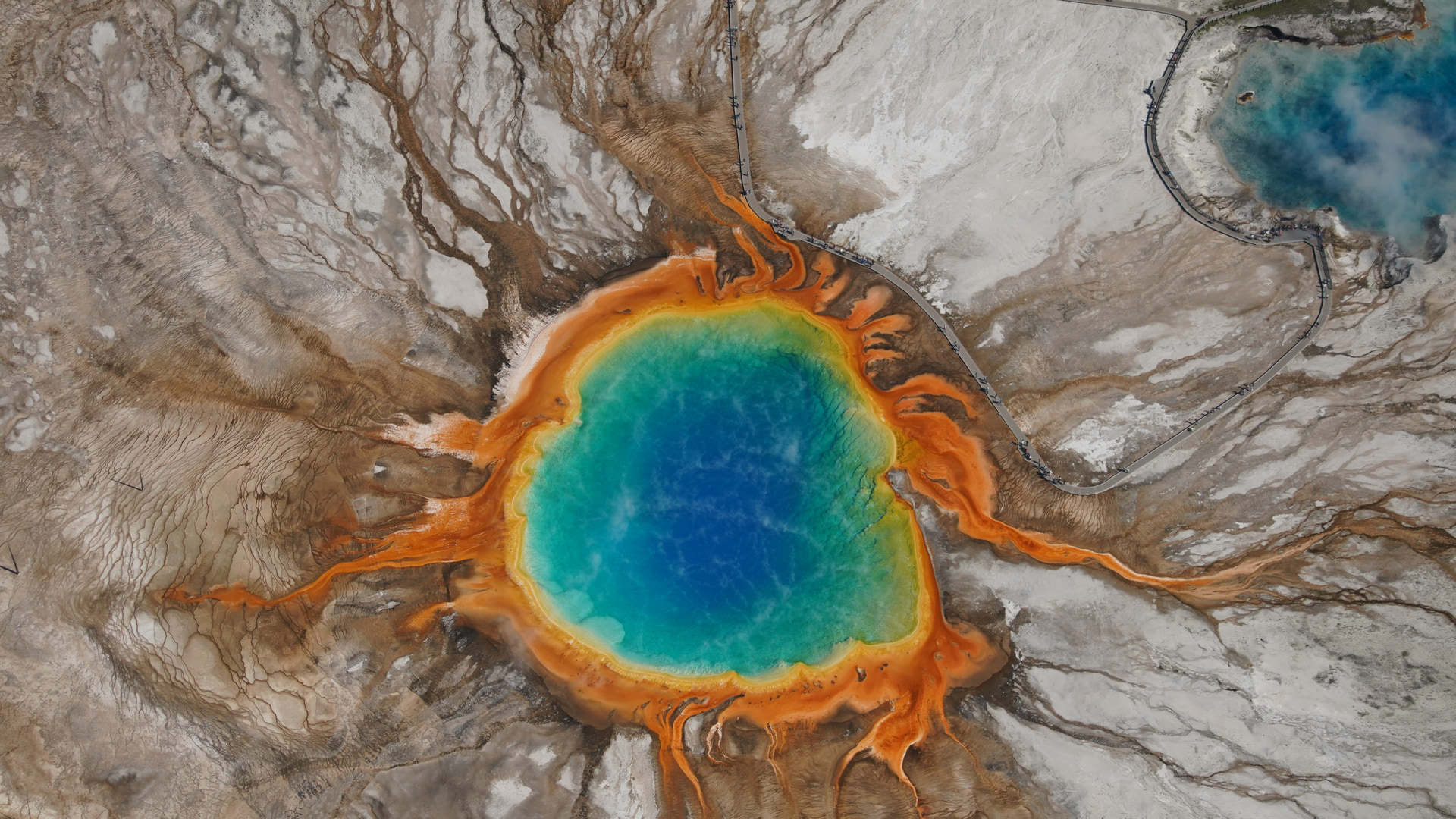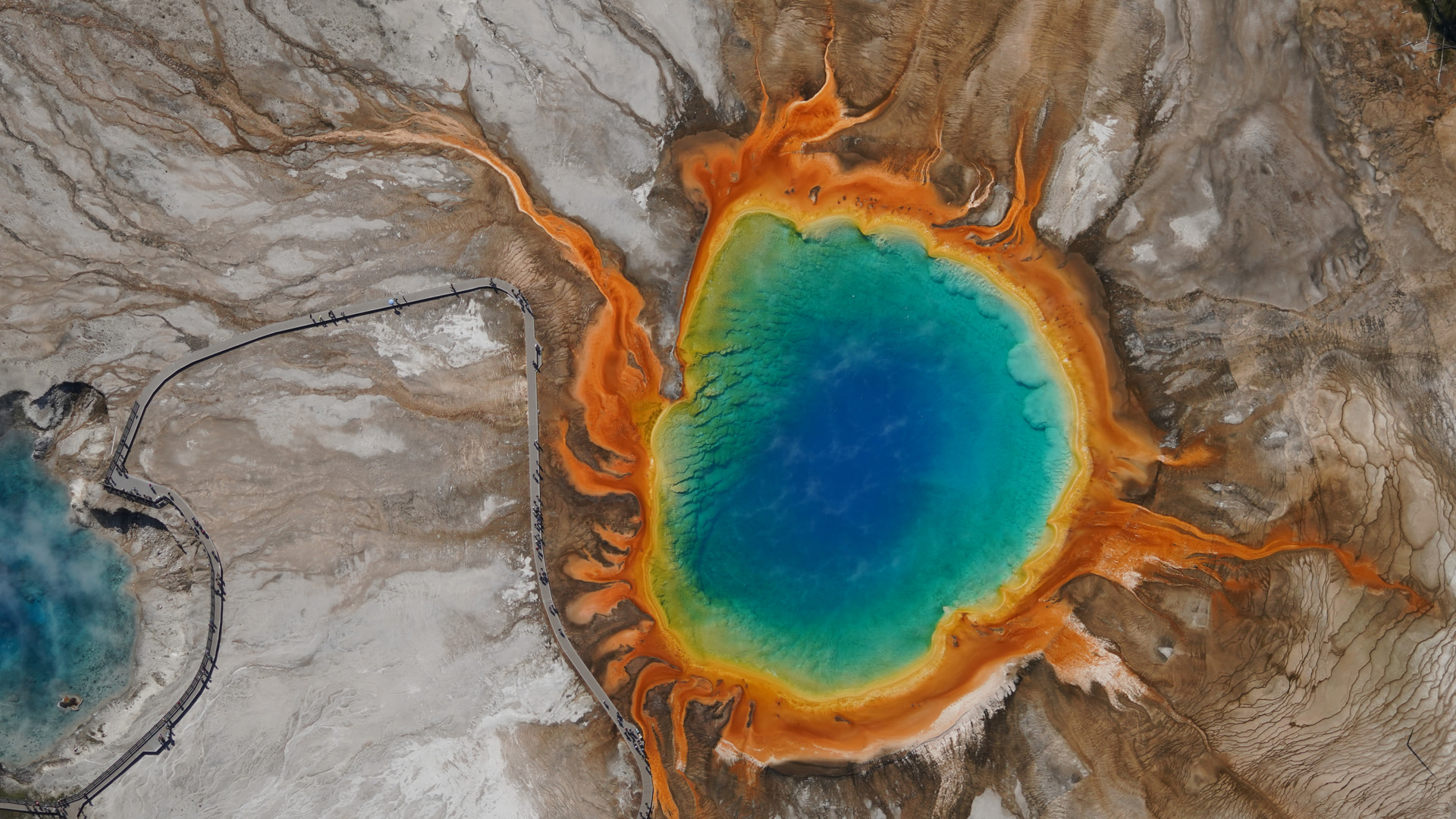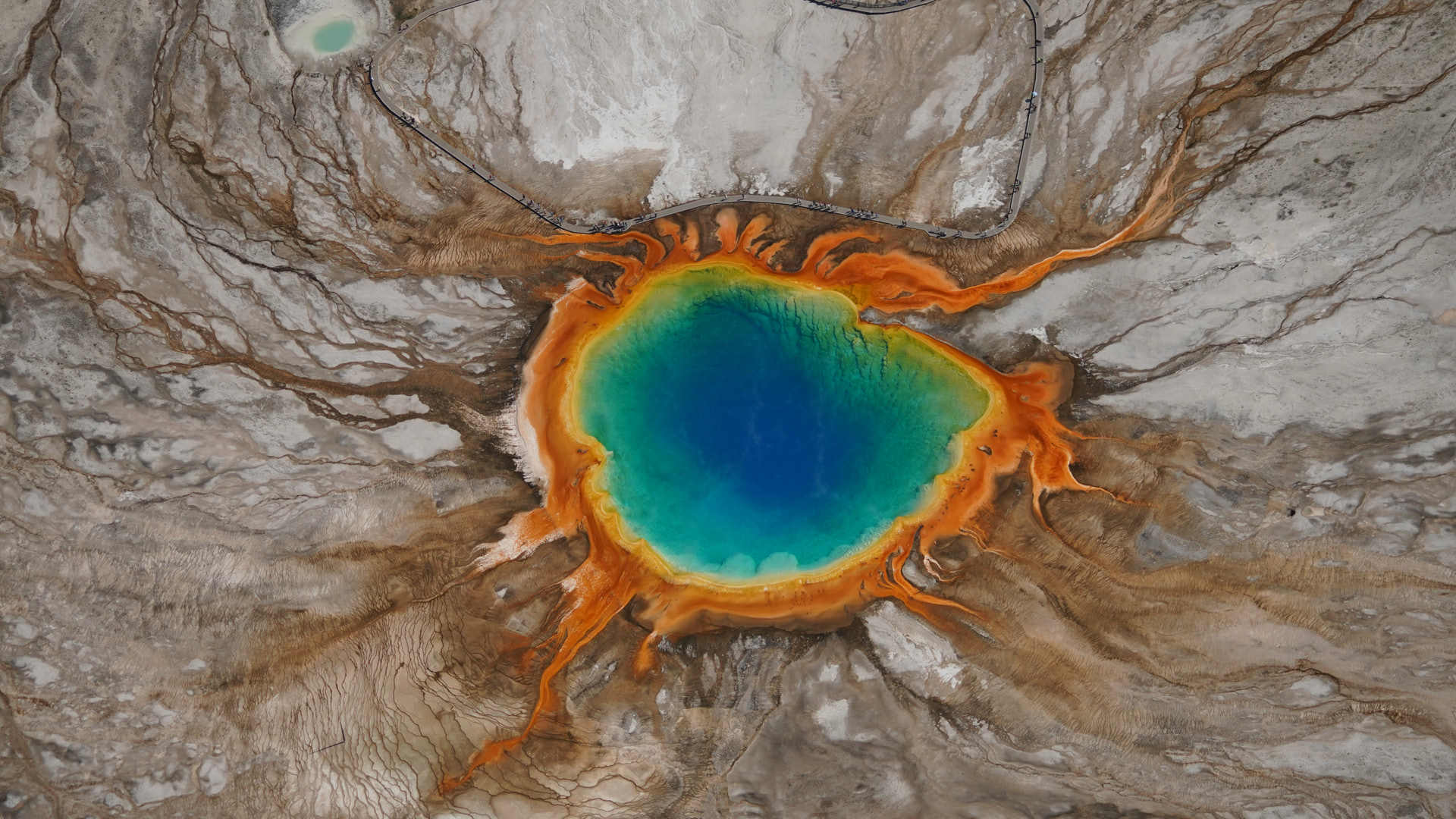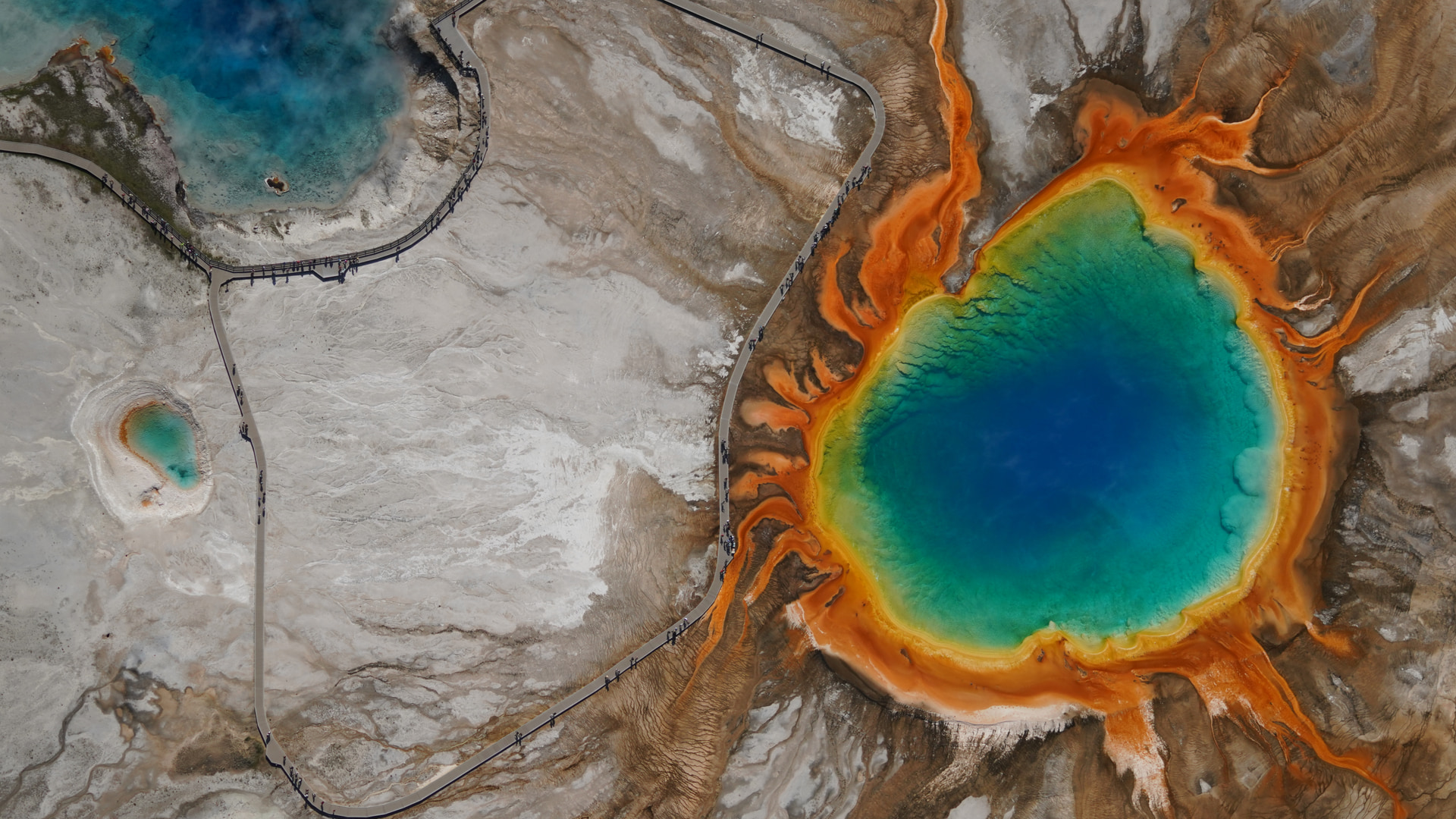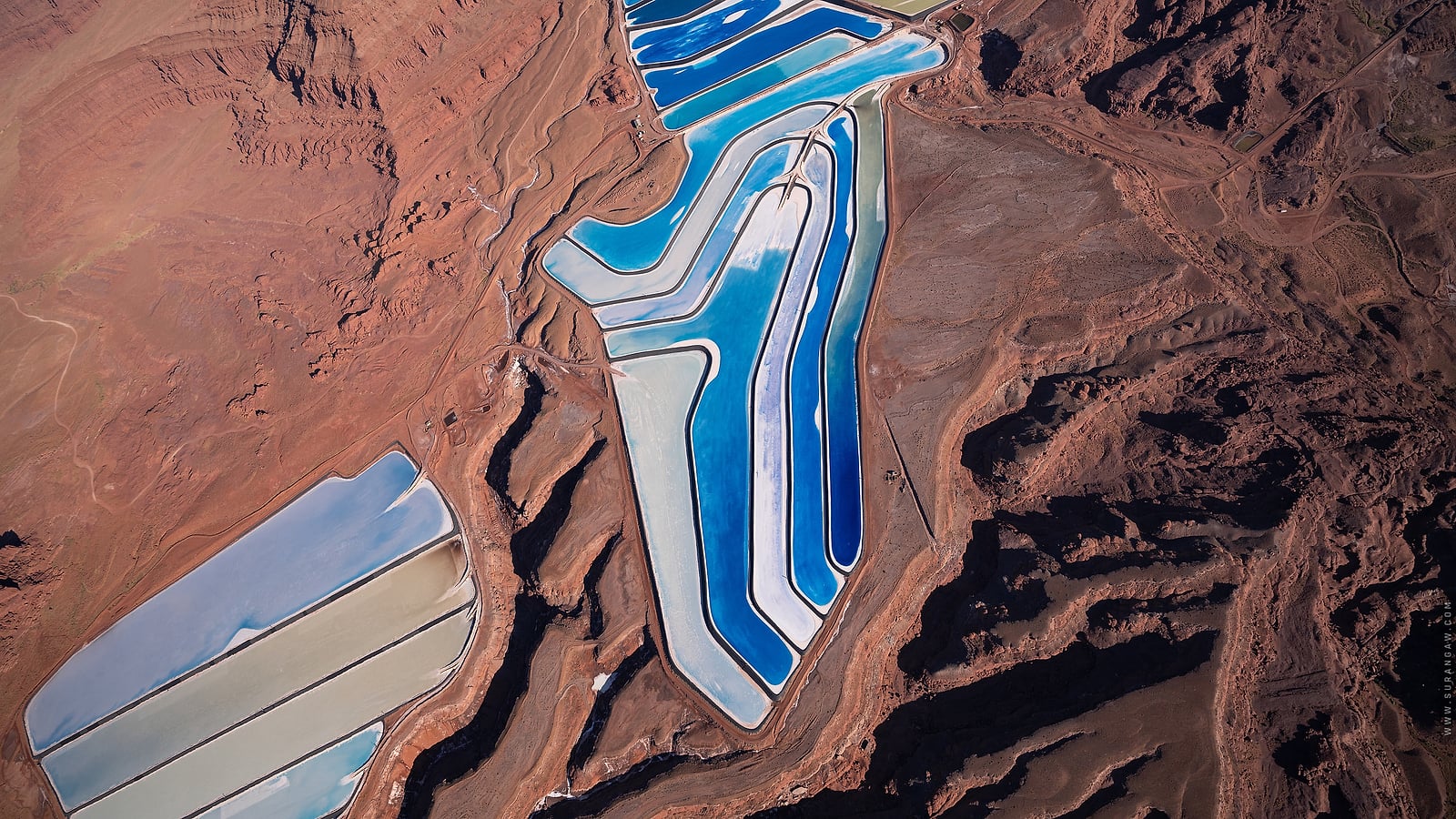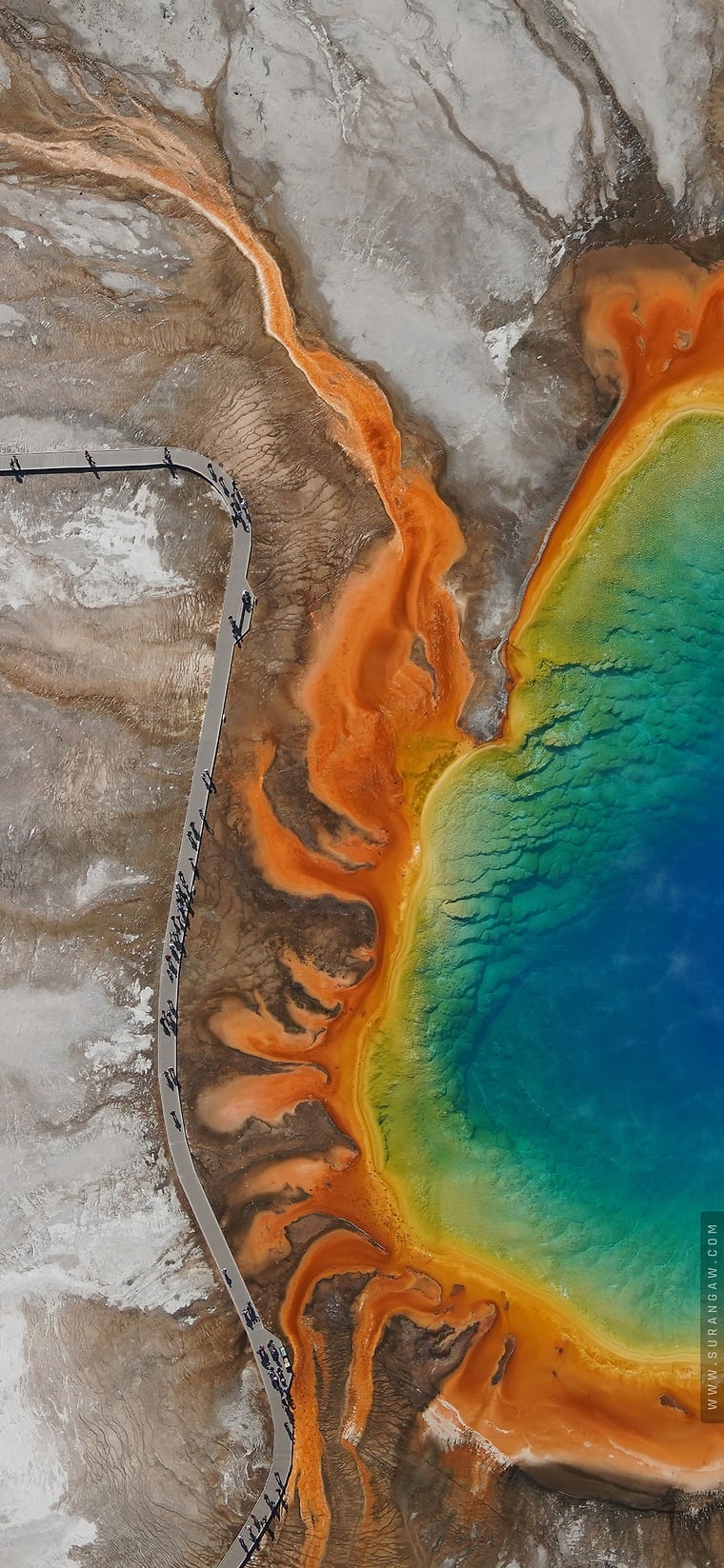
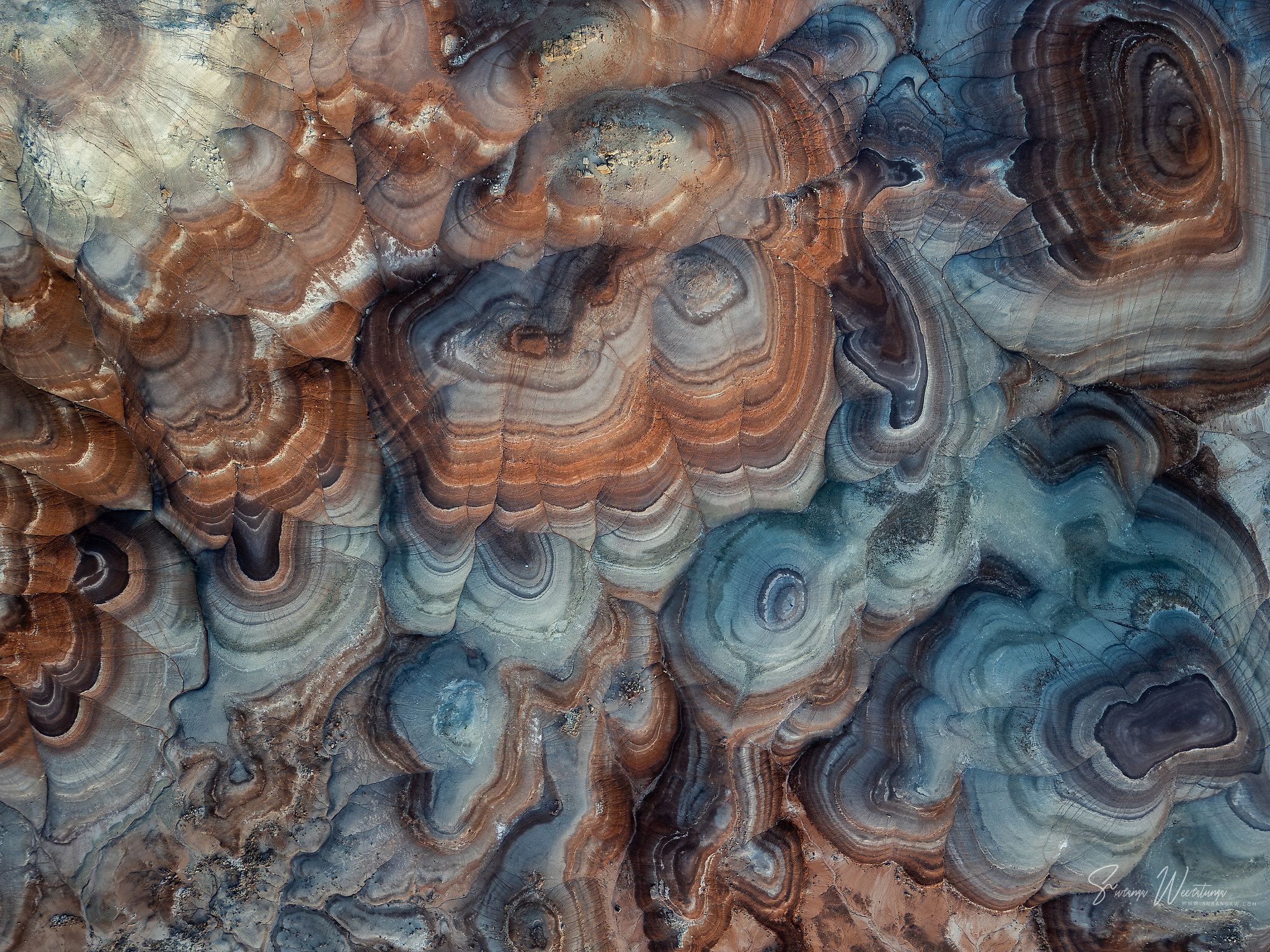
Some places don’t look real until you see them from above. The Bentonite Hills in southern Utah are one of them. On the ground they are rolling clay mounds. From the air they turn into swirls of red, orange, purple, blue and grey, like marbled paper or the rings of a giant tree.
How the colours formed
The hills are made of bentonite, a soft clay formed from volcanic ash that settled here millions of years ago. Each layer holds different minerals, and iron-rich bands turn red and orange while others stay blue-grey or purple.
Wind and rain wear the soft clay down a little more every year. Erosion cuts through the layers at different angles, and that is what creates the rings and ripples you see from above.

A sense of scale
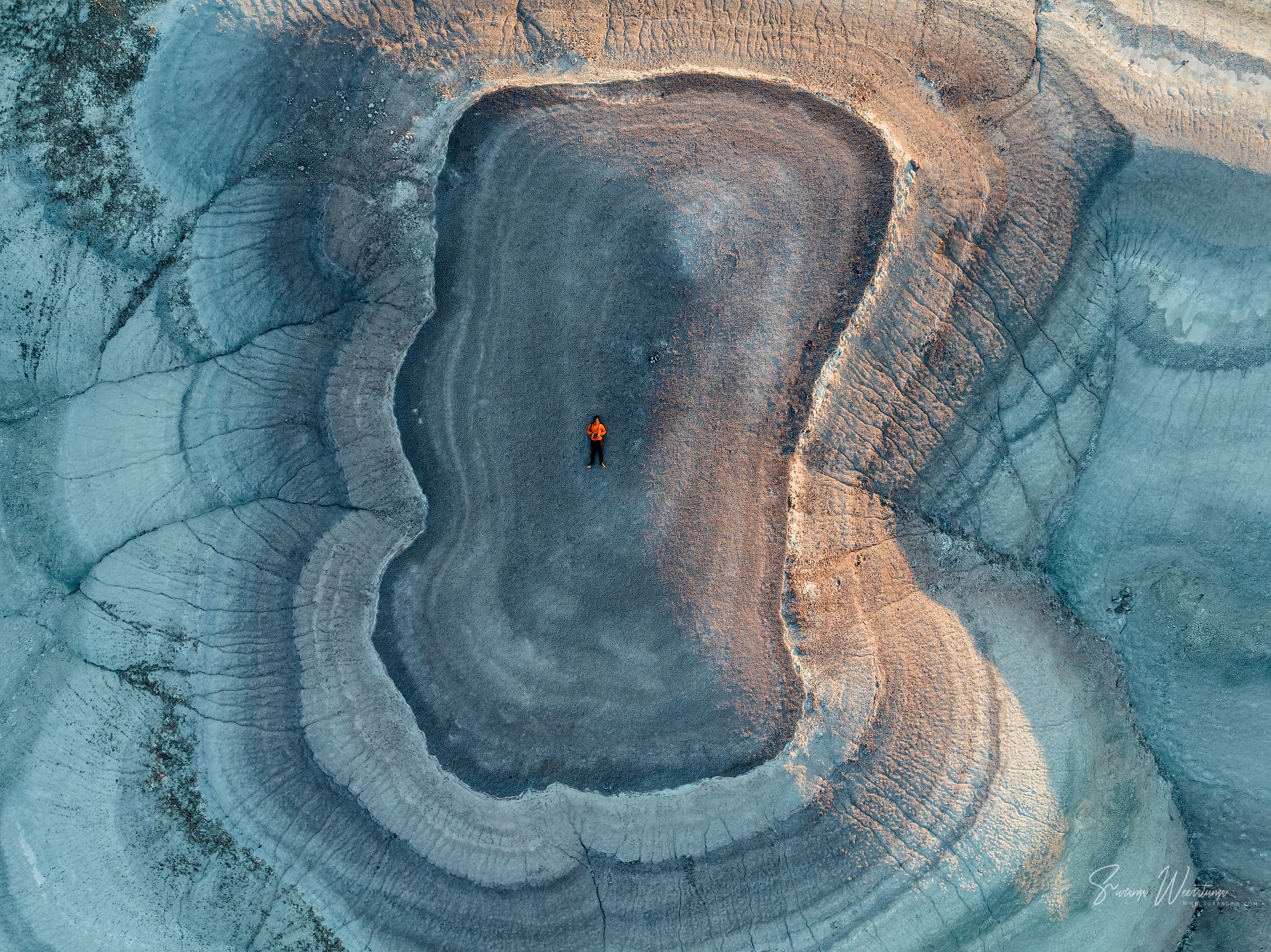
Without something familiar in the frame, it’s hard to tell how big these hills are. A single person lying on the top of a mound shows it straight away, and it turns an abstract pattern into a story.

Tips for photographing the hills
Shoot from straight above to flatten the hills into patterns, and from a lower angle to show their shape.
Soft light works best. Bright midday sun washes out the colours, while early morning, late afternoon or a light overcast brings out the reds and blues.
After rain, the clay turns slick and very sticky, and it’s easy to damage the surface. Wait until it has dried, stay on existing tracks and leave no footprints across the patterns.
If you fly a drone, check the local rules first and keep away from roads and other visitors.
Respect the landscape
The surface of these hills is fragile. Tire tracks and footprints can stay for years in the soft clay and ruin the patterns for everyone. Park on established areas, walk carefully and take everything home with you.