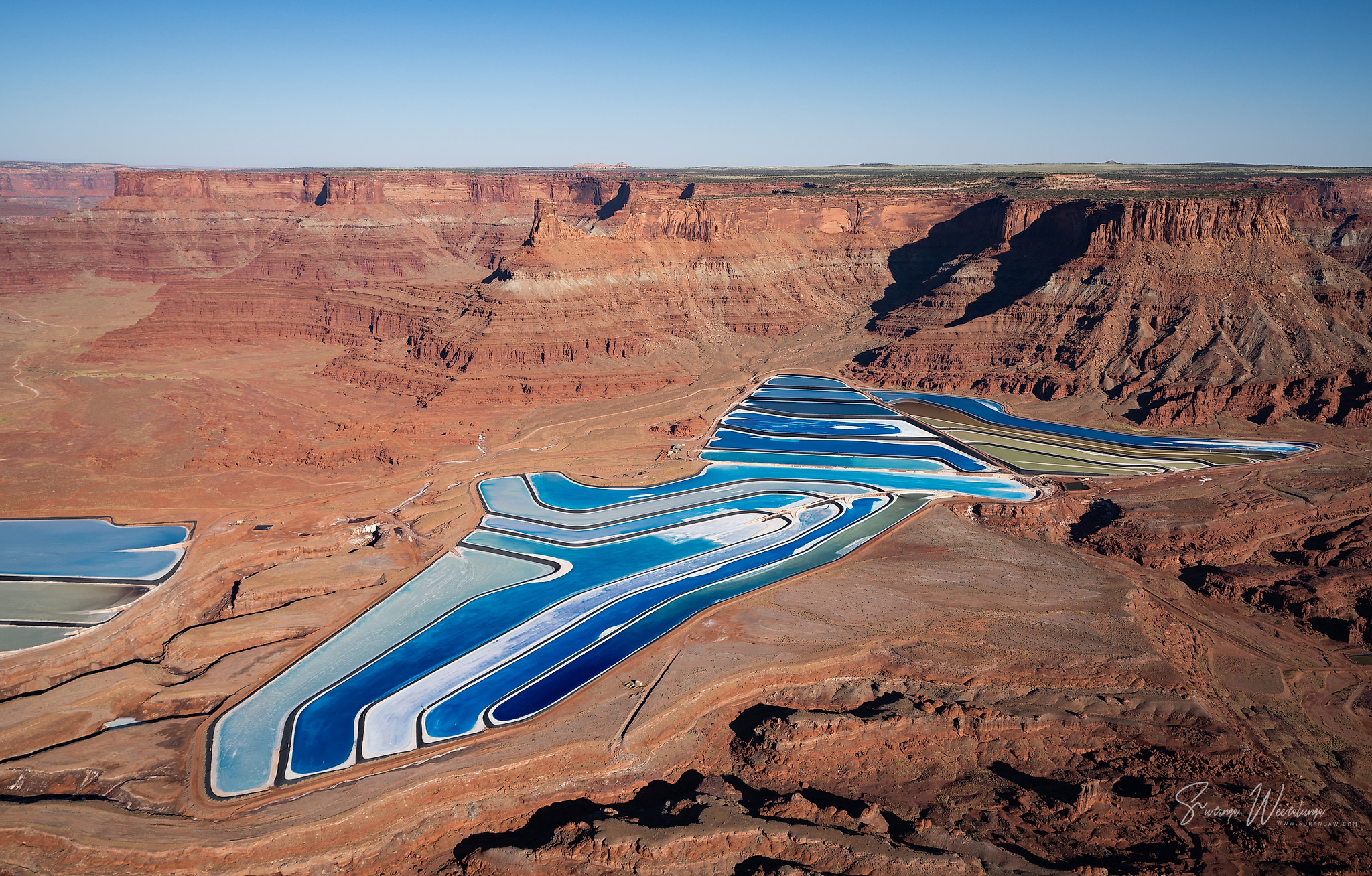
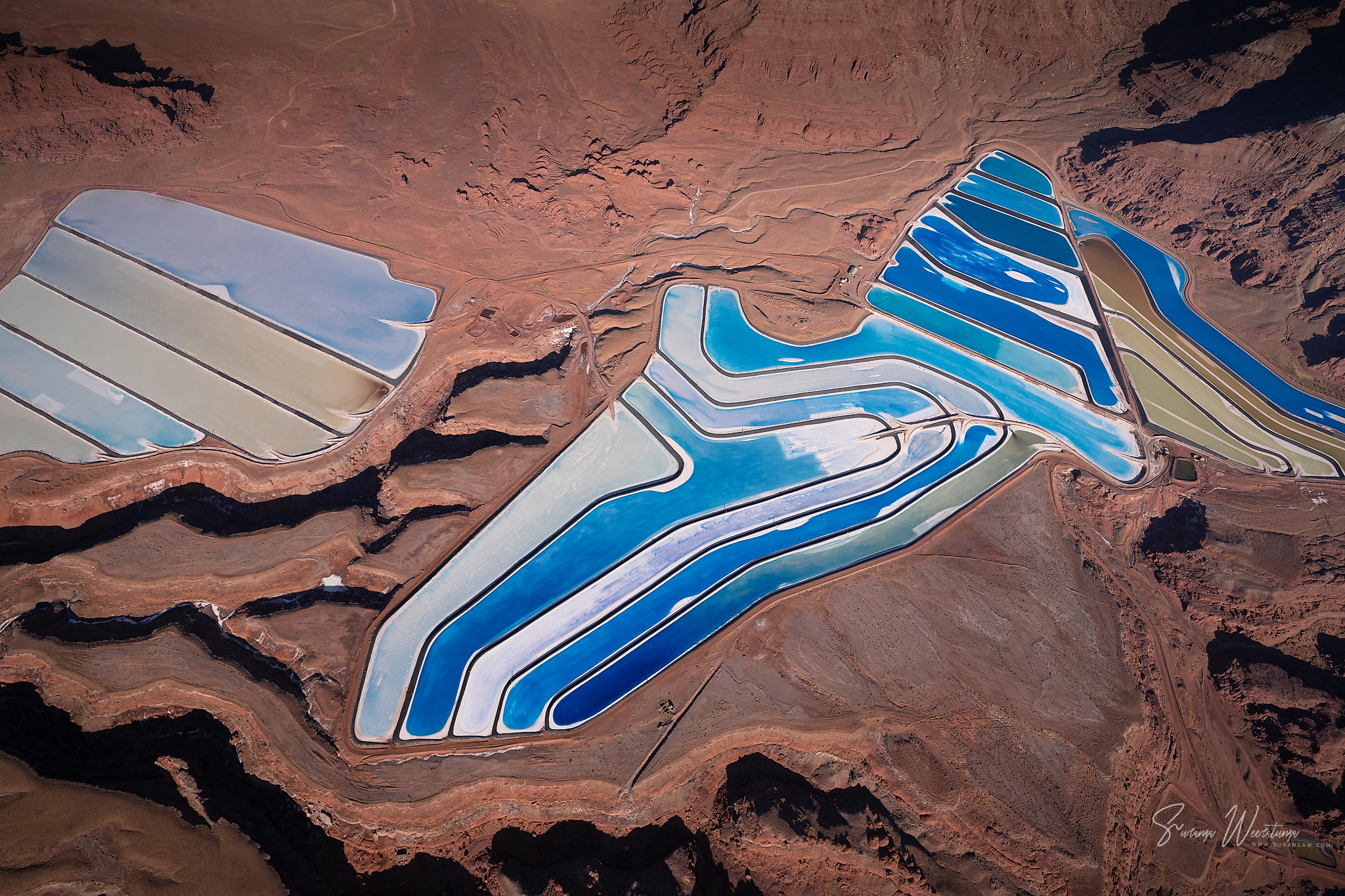
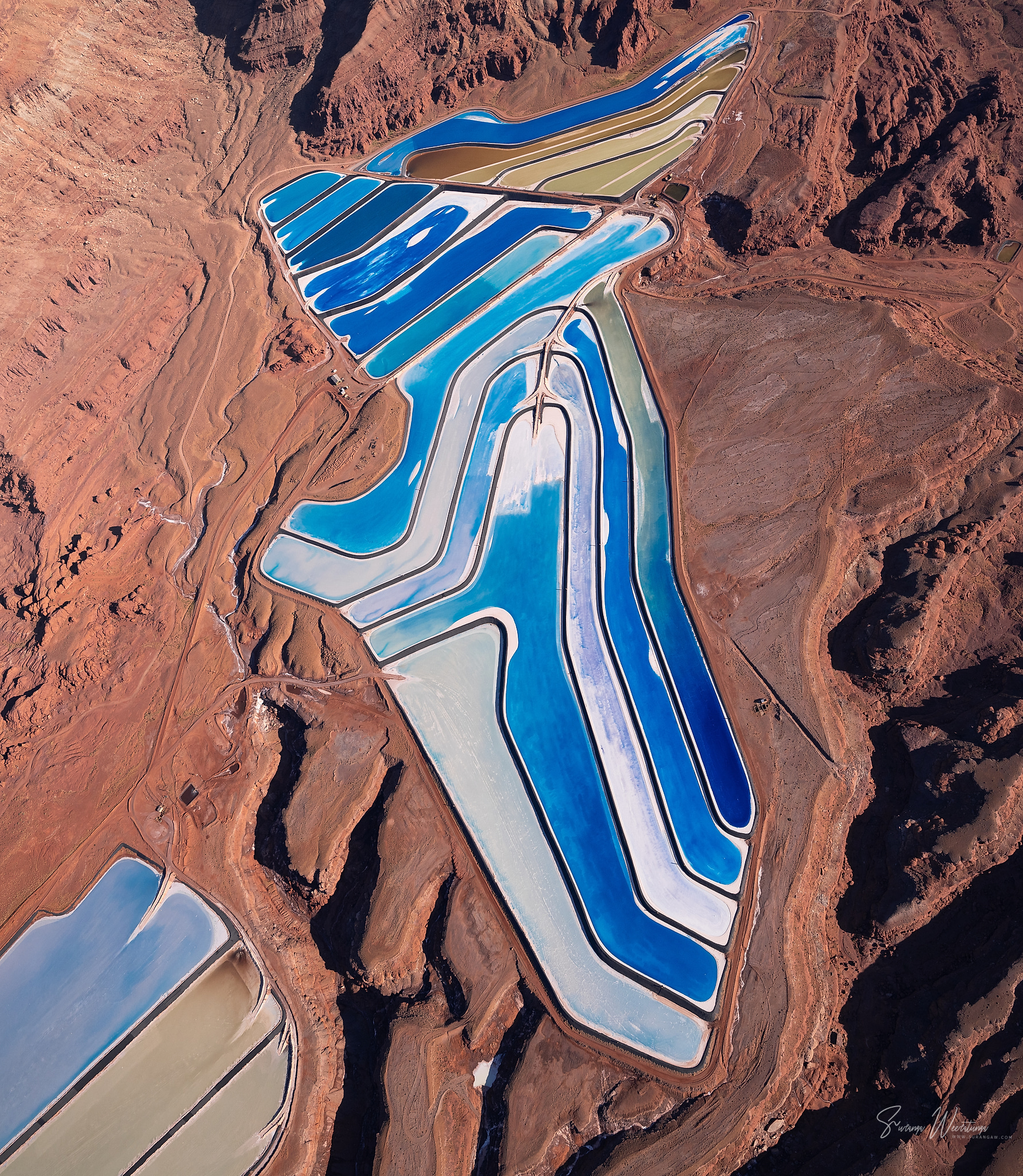
I took these photos from a helicopter, flying over the red canyons near Moab, Utah. The last thing you expect to see out there is a patch of bright turquoise and white. These are the potash evaporation ponds, and from the air they look like abstract art laid across the desert.
Why a helicopter
A helicopter gives you far more freedom than a plane: you can ask the pilot to circle, hold a position and find the angle you want.
Use a fast shutter speed, at least 1/1000 s, to cancel out the vibration. A 24–70mm lens covers most shots, and a 70–200mm lets you pick out the patterns. If the doors are off, strap everything in, including your lens caps.
What are the potash ponds?
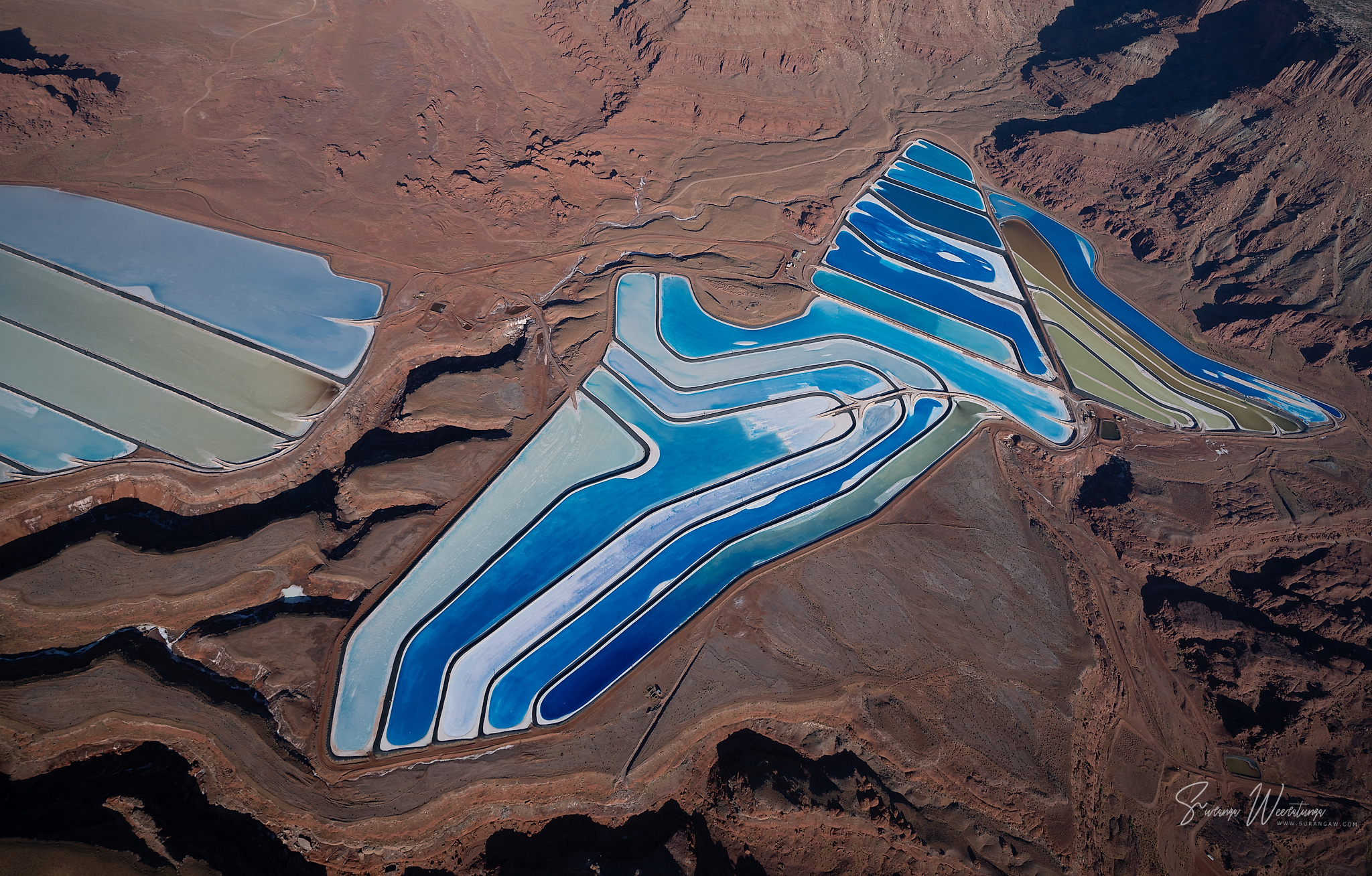
Potash is a potassium-rich mineral used mainly to make fertilizer. Here, water is pumped deep underground to dissolve ancient potash deposits, and the brine is brought back up into these shallow ponds.
The water is dyed blue so it absorbs more sunlight and evaporates faster. Once the water is gone, the potash crystals left behind are harvested. The different shades in each pond show how far along the drying process it is.
Graphic shapes from above
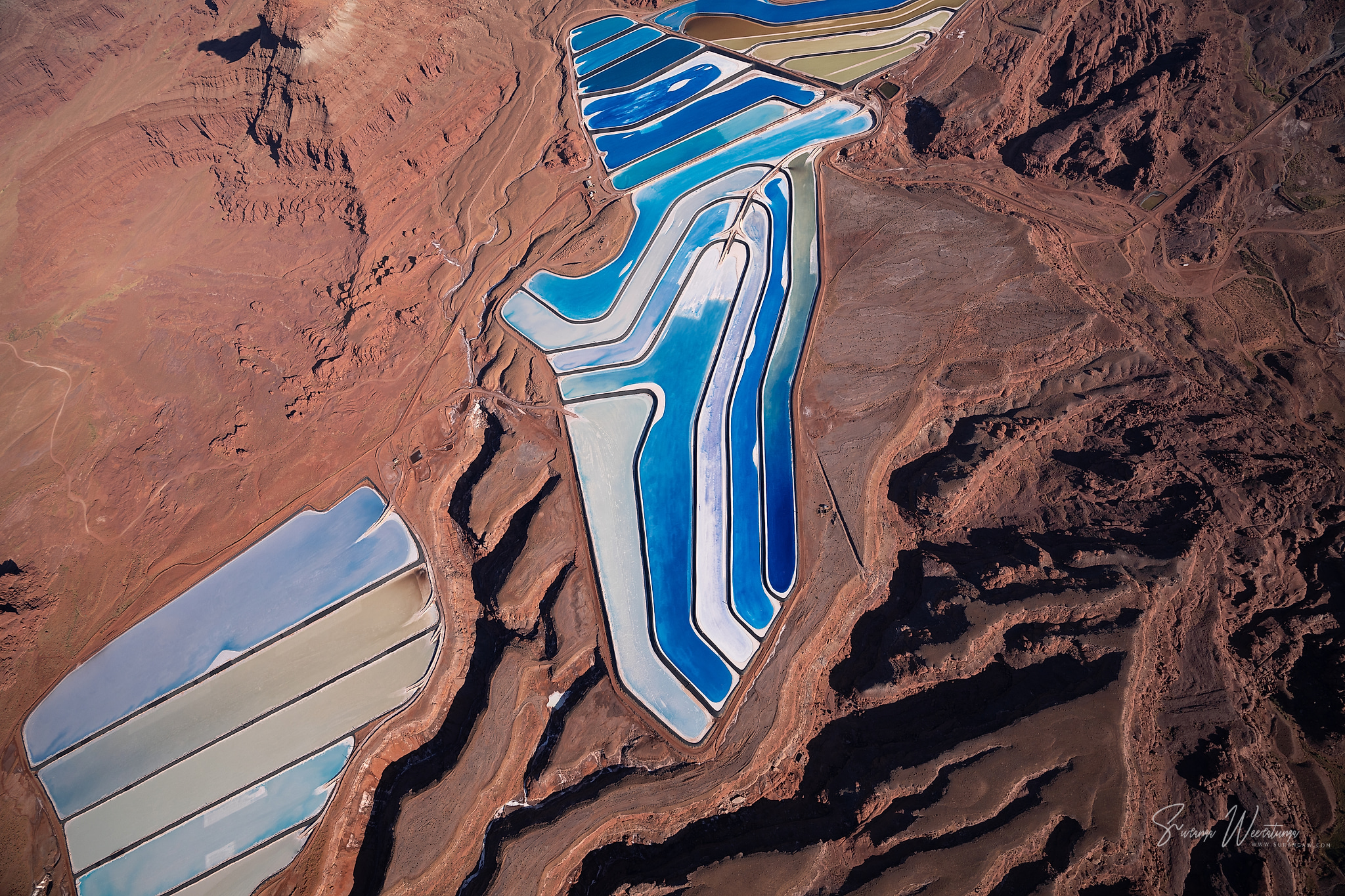
The ponds work best when you treat them as shapes and colours rather than a landscape. Look for curves, repeating lines and strong contrast between the blue water, the white salt and the red rock.
Seeing them from the ground
You can see the ponds from the overlooks in Dead Horse Point State Park, just outside Canyonlands National Park. The view down into the canyon shows the blue ponds far below. The Potash Road (Highway 279) also runs along the Colorado River near the site.