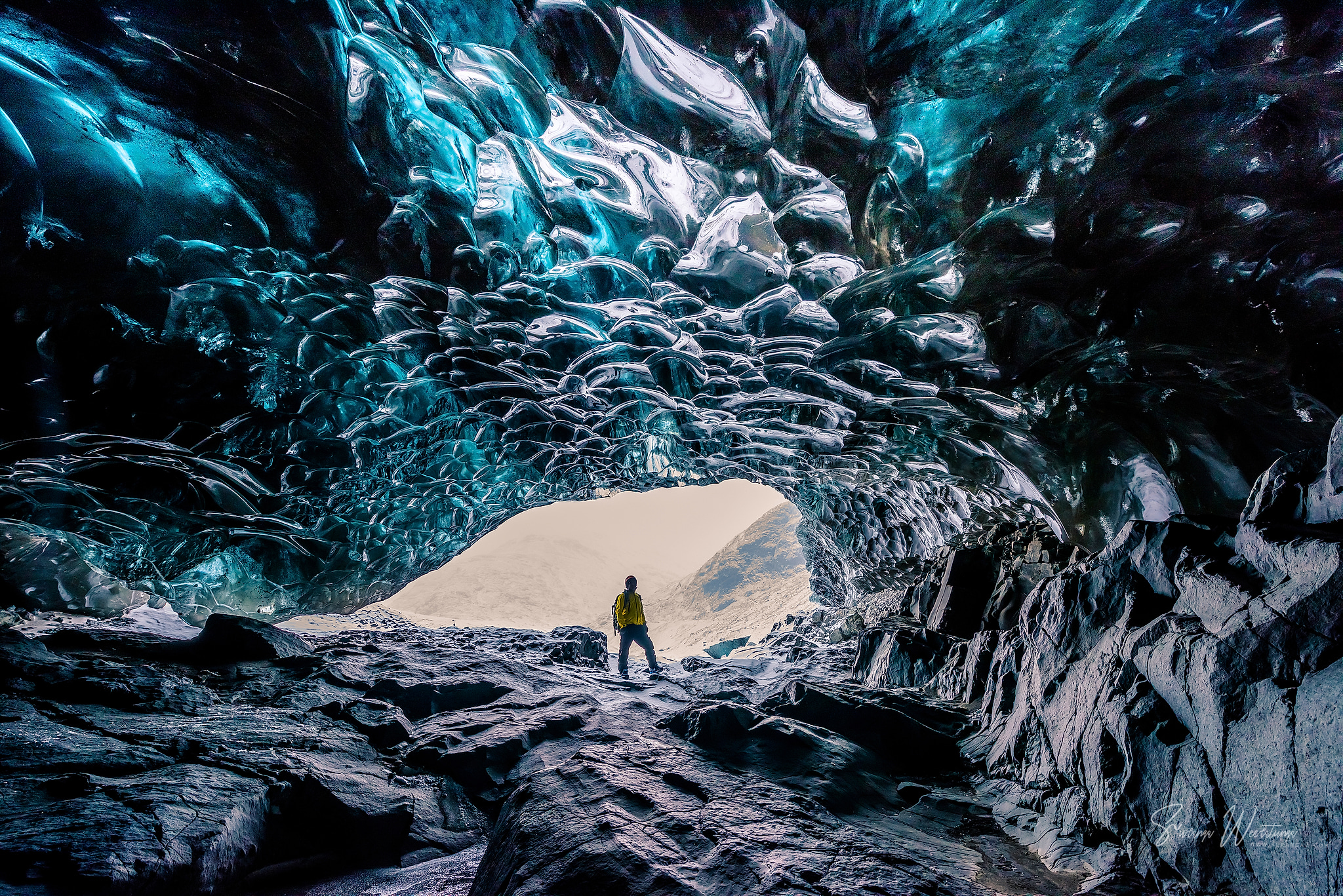
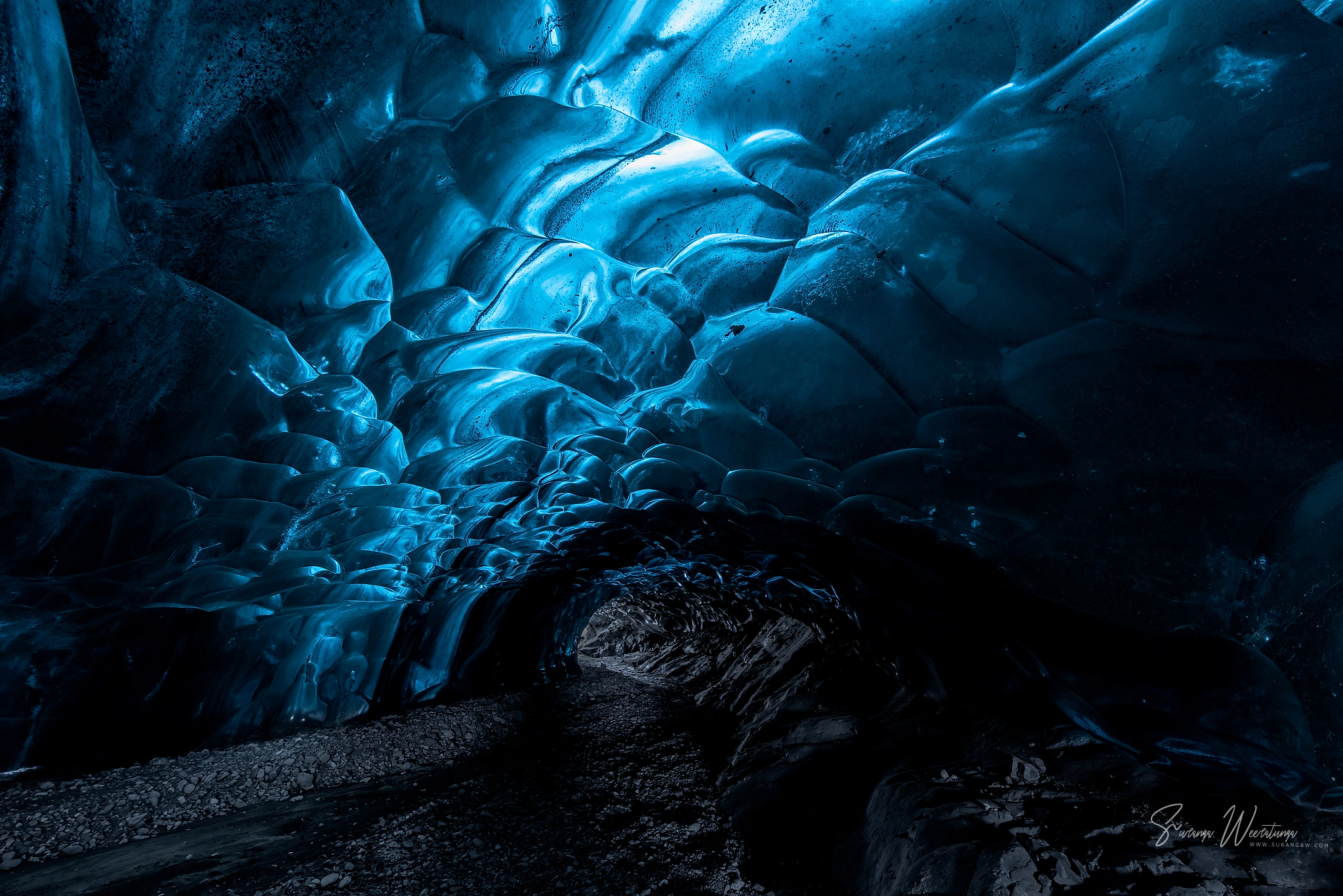
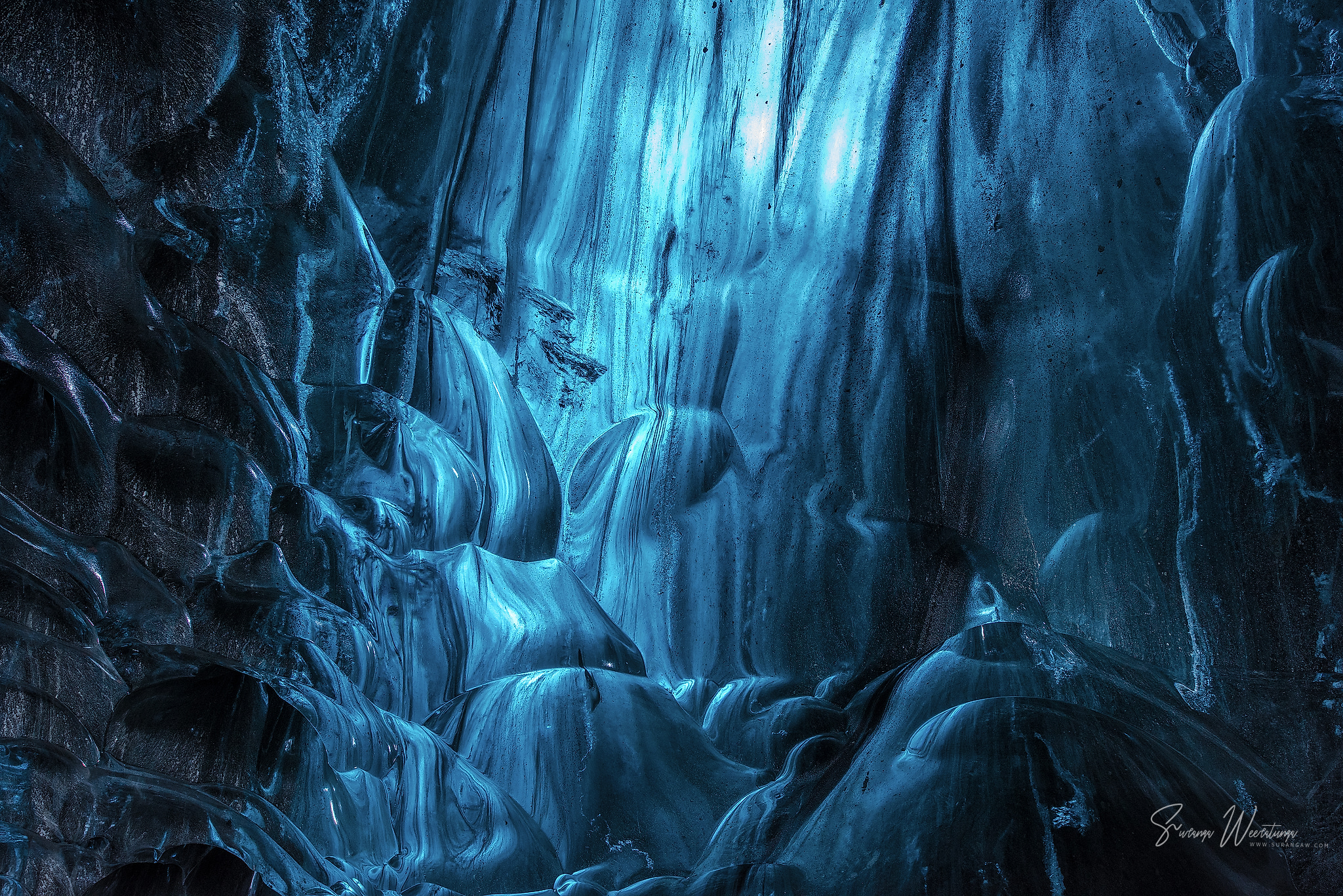
I first stepped into the glacier caves of Vatnajökull in 2014, and I still remember the moment the light changed. Outside it was the grey and white of an Icelandic winter. Inside, everything turned blue. The ceiling glowed, the walls rippled like frozen waves, and I could see air bubbles trapped in ice that formed centuries ago. It’s one of the most otherworldly places I’ve ever photographed.
What are glacier caves?
Vatnajökull is Europe’s largest ice cap, covering about 8% of Iceland. In summer, meltwater runs through and under the glacier, carving tunnels and caverns into the ice. When temperatures drop in winter, the water stops flowing and the caves become stable enough to enter safely. The ice is so dense and old that it absorbs almost every colour of light except blue, which gives the caves their deep blue glow.
No two seasons are the same. Most caves collapse or melt away each summer, and new ones form in their place, so every visit shows you something you’ll never see again.
Best time to visit
The main ice cave season runs from about November to March, when it’s cold enough for the caves to be safe. Exact dates depend on the weather each year, and tour operators decide when caves can open.
December to February usually brings the most stable conditions and the widest choice of caves. Winter days are short, so plan around the limited daylight. Shooting around the middle of the day gives you the most light through the ice. Book a certified glacier guide well in advance.
Safety first: never go without a guide
Glacier caves are beautiful, but they can be extremely dangerous. The ice is always moving and melting, and caves can collapse, flood or shift without warning. Hidden crevasses, thin ice and sudden weather changes make the glacier itself risky even before you reach a cave.
Always go with a certified glacier guide. Guides check the caves every day, know which ones are safe and can turn back if conditions change. Never enter a glacier cave on your own, even one that looks stable.
Use proper gear. A helmet, crampons and sturdy waterproof boots are essential. Most tour operators provide helmets and crampons, but check before you book.
Follow your guide’s instructions. If they say a section is off-limits or it’s time to leave, listen. They know the ice better than anyone.
Respect the season. Only visit natural ice caves during the winter season, when conditions are safer. In summer, meltwater makes them unstable and dangerous.
No photo is worth the risk. With the right guide and gear, you can enjoy these places safely.
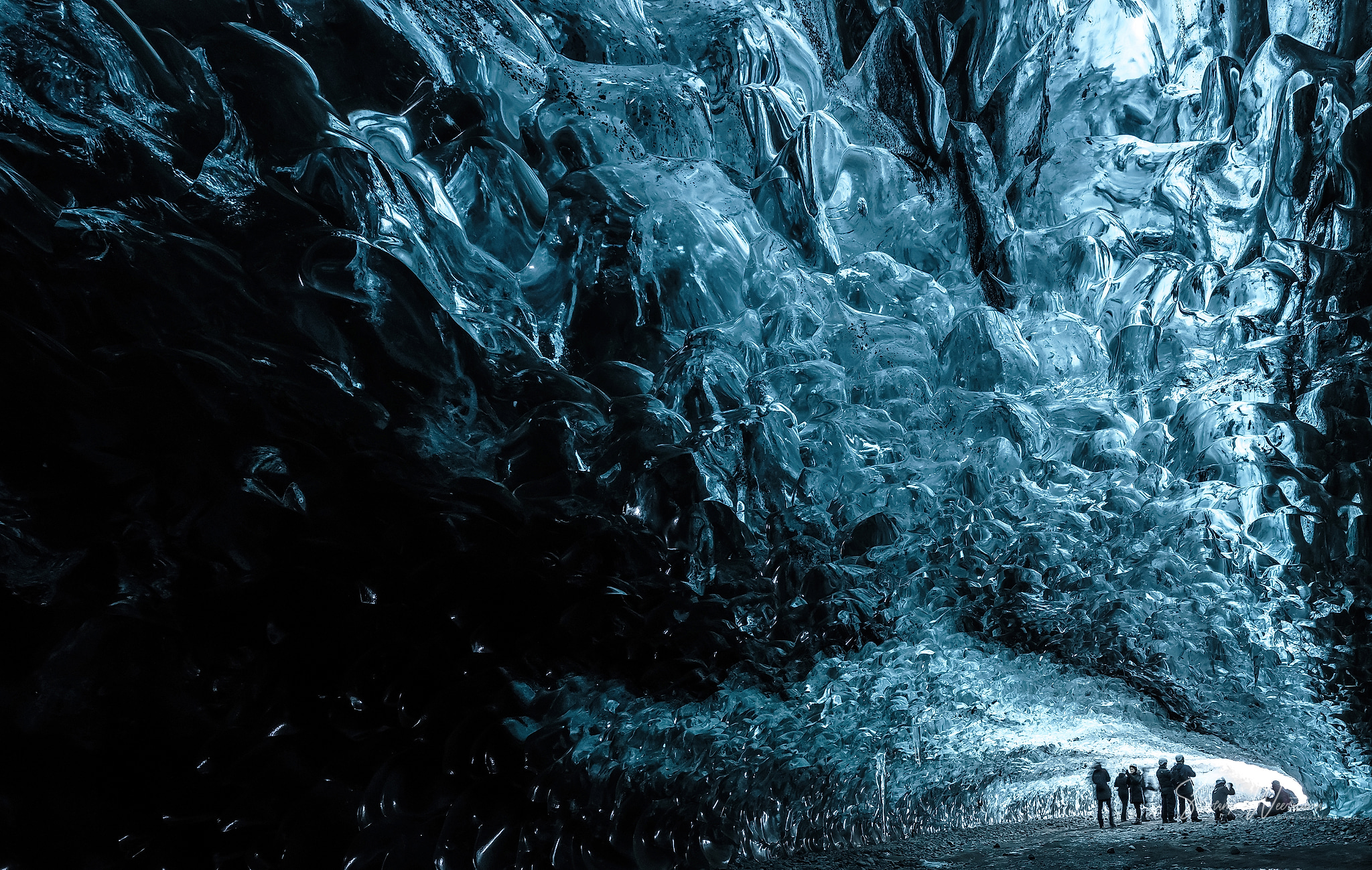
Photography tips
Bring a wide-angle lens. The caves are tight, and a wide lens (around 14–24mm on full frame) captures the shape of the tunnels and ceilings.
Use a tripod if you can. Light inside is limited, and a tripod lets you keep a low ISO and capture the fine detail in the ice. Some tours are crowded or tight, so a small, light tripod is easiest.
Underexpose slightly. Bright ice can easily blow out. Taking the exposure down by about ⅓ to ⅔ of a stop keeps the textures and deep blues.
Check your white balance. Auto white balance can sometimes turn the blue grey or green. Shoot in RAW so you can adjust the colour later.
Add a person for scale. A figure in a dark or colourful jacket shows how huge the caves are and adds a focal point.
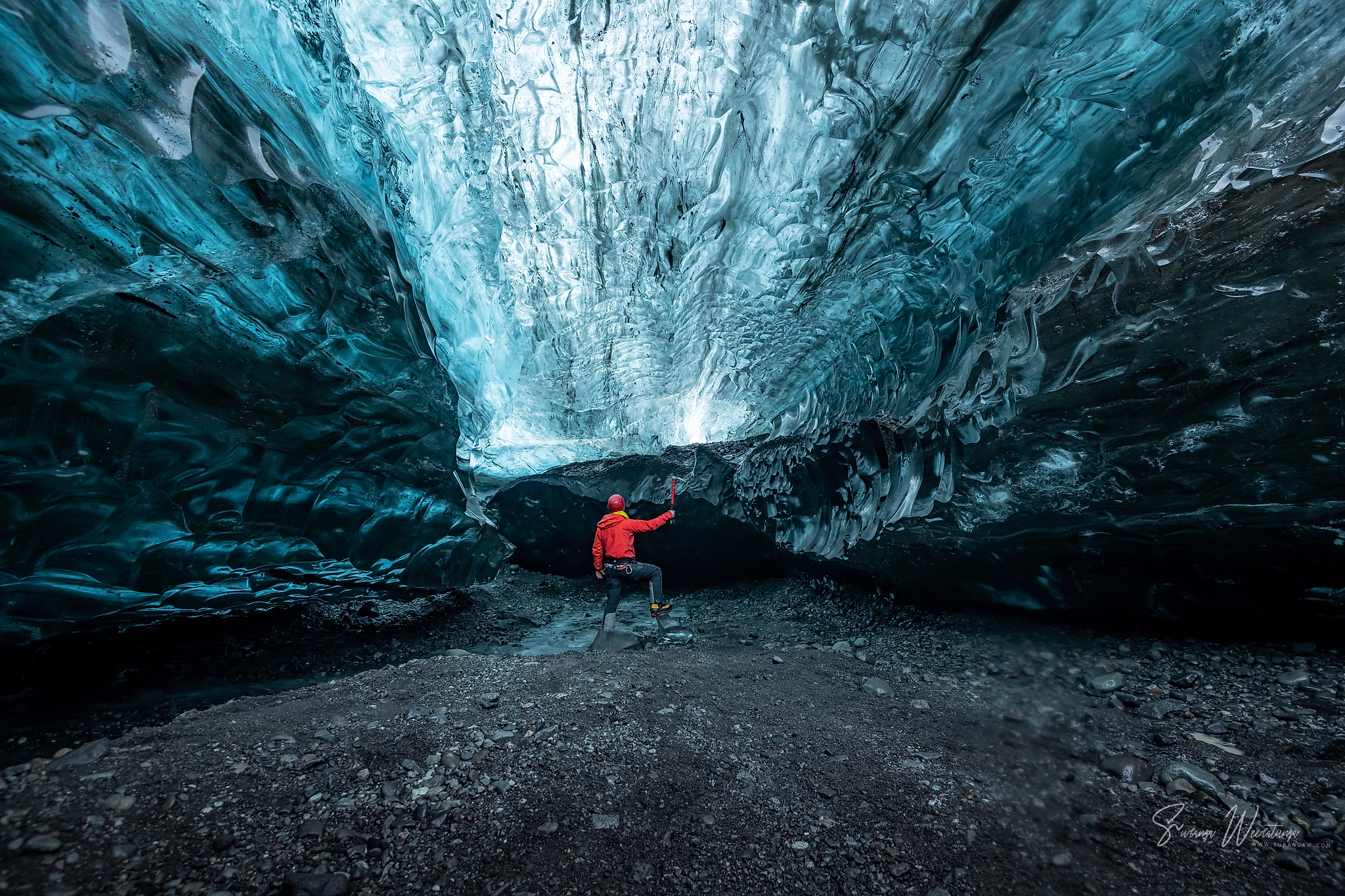
Look for the details too. Air bubbles, layers of volcanic ash and patterns on the walls make beautiful abstract shots.
Protect your gear. Dripping water and cold can be tough on equipment. Bring a lens cloth, spare batteries kept warm in an inside pocket, and let your camera warm up slowly in its bag afterwards to avoid condensation.
Respect the guide’s timing. Tours move on schedule, so plan your shots quickly and stay with the group.
What to wear
Dress in warm layers with waterproof outer clothing and sturdy hiking boots. Tour companies usually provide helmets and crampons. Gloves thin enough to work your camera settings are worth bringing.
Final thoughts
Since that first visit in 2014, I’ve kept coming back to Iceland’s ice. The glacier caves remind me how quickly the world changes, and how lucky we are to see places like these before they disappear. If you go, take your time, look up and let the blue surround you.